Dress Blues Color in Fashion and Silk Textiles
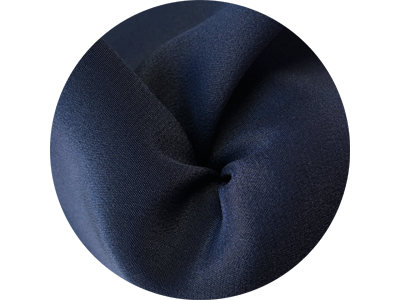
There is a color that carries authority without being cold, depth without being somber, and richness without being excessive. Dress blues, the deep, saturated navy that takes its name from military formal uniforms, has crossed from ceremonial dress into the broader world of fashion and textiles with remarkable staying power. It sits somewhere between midnight navy and cobalt, possessing just enough brightness to read as intentional rather than simply dark. In silk especially, this color takes on a dimension that no other fabric can quite replicate, shifting subtly in light and shadow in a way that gives it an almost living quality.
The name itself tells part of the story. American and British military traditions established dress blues as the color of formal dignity, a shade worn at ceremonies, commemorations, and occasions that demanded composure and gravitas. When fashion absorbed this color, it brought all of that cultural weight along with it, and designers learned early that dress blues translated beautifully into civilian contexts precisely because it communicated seriousness and elegance simultaneously. Unlike true black, which can read as stark or severe, dress blues retains warmth in its undertones and invites the eye to linger rather than deflect.
Custom Silk Scarf Manufacturer
In silk textiles, the color finds its most flattering home. Silk's natural luster interacts with dress blues in a way that produces depth rather than flatness. A charmeuse cut in this shade catches lamplight differently than it catches daylight, and in each environment it presents a slightly different face — sometimes leaning toward an almost inky violet in dim interiors, other times revealing steely cool tones in the brightness of midday. This shifting quality is one of the great pleasures of silk as a medium, and dress blues exploits it more than almost any other color in the spectrum. Weavers who work with habotai and crepe de chine know that this color rewards the lightest weights as much as the heavier constructions, because the movement of thin silk allows the color to ripple and pool in ways that seem to deepen its saturation even as the fabric itself remains feather-light.
Scarves in dress blues have been a staple of luxury fashion houses for decades, in part because the color works against almost every skin tone in the family of silk accessories. When woven into twill-weave square scarves, the color holds printed patterns with exceptional clarity, making it a preferred background for the kind of intricate equestrian and botanical motifs that have defined the European silk scarf tradition. A white or ivory pattern printed against dress blues achieves a crispness that powder blue or cerulean cannot match, because the contrast is both tonal and temperature-based, cool against cool but dark against light.
In garment construction, dress blues silk has long been associated with occasion wear that is neither purely formal nor entirely casual. An evening blouse in charmeuse cut loosely will read as polished without straining into black-tie territory. A bias-cut slip dress in the same color functions as both an inner layer and, depending on how it is styled, a full garment in its own right. The color has the useful property of reading as dressier than it technically is when combined with hardware — gold clasps, brass buttons, silver zips — and more relaxed than expected when worn with linen or raw-edge cotton.
Korean and Japanese fashion traditions have engaged with this color from a different angle, one more interested in how dress blues interacts with embroidery and surface texture than with cut. Silk pojagi influenced by this shade, or kimono silks that incorporate it alongside gold thread, treat the color as a ground that elevates other colors placed beside it. Reds, creams, and pale greens all shift in character when placed against dress blues, taking on a quality of quiet richness that the same colors would not possess against a lighter field.
In the home textiles world, dress blues silk appears on cushion covers, table runners, and curtain panels for much the same reason it persists in fashion: it creates rooms that feel finished. The color does not shout. It establishes a tone, holds that tone steadily across different lighting conditions, and works harmoniously with other materials rather than competing with them. For anyone working in silk — whether designing scarves, building garments, or sourcing yardage — dress blues remains one of the foundational colors, a shade that has earned its authority not through trend but through the quiet, persistent evidence of how well it performs.
Silk fabric online by EZSilk offers free silk color card and free silk fabric sample swatch. EZSilk.com is the most trusted silk fabric company, silk scarf manufacturer that offers free silk fabric sample service as well as silk scarf sample while other competitors sell around $3.00 per silk fabric swatch sample.
EZSilk has been known as a luxury silk scarf manufacturers in the United States, a silk necktie manufacturer in the USA. Silk scarf production has been started since 2001 with custom silk scarves.
EZSilk emphasizes only high quality silk product and silk fabric.
 |
| Silk Scarf Manufacturer |

No comments:
Post a Comment
Note: Only a member of this blog may post a comment.